
Vancouver Home Sales Slip 4.6%: Why Buyers Aren't Biting Despite Lower Prices
Share
News article poster

Residential sales in Metro Vancouver totalled 1,869 in August 2026, a 4.6 per cent decline from the 1,959 sales recorded in August 2025, according to the latest data from Greater Vancouver REALTORS® (GVR). This figure sits 20.7 per cent below the 10-year seasonal average of 2,356 transactions. The summer of 2026 underperformed relative to 2025, confirming a sustained cooling pattern that has persisted since May. New listings also moderated, with 4,100 properties coming to market—down 3 per cent from August 2025 and 1.3 per cent below the 10-year average for new supply.

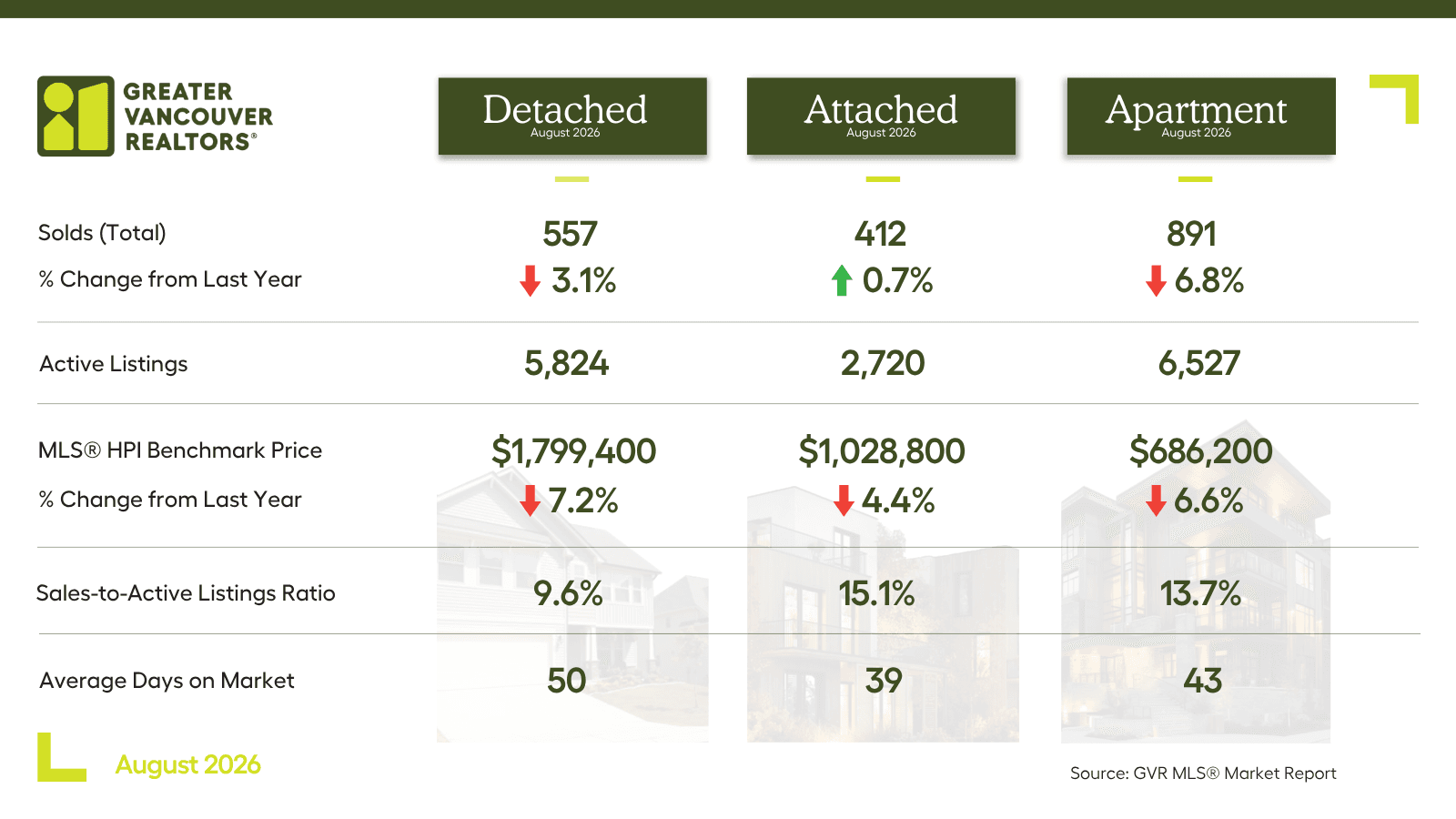
Total active inventory stands at 15,798 properties, down 2.7 per cent from August 2025 but still 26.2 per cent above the 10-year seasonal average. The sales-to-active listings ratio has slipped to 12.3 per cent across all property types, hovering just above the 12 per cent threshold that historically signals sustained downward price pressure. Detached homes sit at 9.6 per cent, attached at 15.1 per cent, and apartments at 13.7 per cent. GVR chief economist Andrew Lis noted that the organization had already revised its 2026 forecast downward, and August's performance validated that conservative stance.

Daniel Wu Commentary
From a senior Greater Vancouver agent's perspective, this data confirms what we've observed in showing activity and offer volumes since late spring. The market isn't frozen—deals are happening—but the urgency has evaporated. First-time buyers with pre-approvals and down payment flexibility have genuine opportunity, particularly in the apartment segment where prices have adjusted most from peak levels. Investors remain largely absent, which removes a layer of competition but also signals broader confidence concerns. The key metric to watch isn't month-to-month price changes but inventory absorption rates. Until the sales-to-listings ratio consistently moves above 15 per cent, sellers should expect to compete on price and presentation. Buyers should resist the temptation to time a bottom perfectly; instead, focus on properties that work for 7-10 year holds at current financing costs.