Share
News article poster
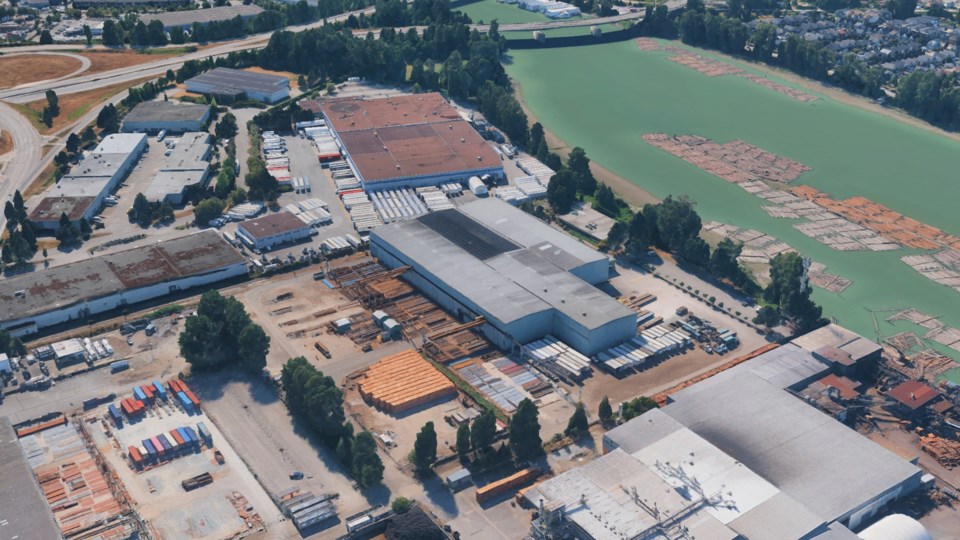
Doka Canada Ltd. has executed a strategic relocation to 830 Carlisle Road on Annacis Island in Delta, signing a 10-year lease with Grosvenor Property Canada for a 15-acre site vacated by Russel Metals Inc. last fall. The Austria-based Umdasch Group subsidiary, which supplies formwork and scaffolding to construction projects across Metro Vancouver, will retrofit the existing 167,000-square-foot building to create its largest covered outdoor storage facility globally. The move doubles the company's regional footprint and includes plans to sublet portions to sibling firm At-Pac, addressing immediate operational needs without relocating to the periphery of the region. Occupancy began this month, marking a significant commitment to the Annacis Island industrial hub despite broader market constraints.
The deal arrives as Metro Vancouver's industrial vacancy rate has declined amid a severe supply contraction. According to Newmark Canada, industrial space under construction has dropped 55 percent from the 2022 peak, creating intense competition for large-format facilities. A "flight to quality" has occupiers prioritizing newer, more efficient buildings, driving record rents for modern distribution centers while older stock faces elevated vacancy. This bifurcation has left many industrial users caught between prohibitive costs for new space and unsuitable legacy properties. Doka's search initially dismissed the Russel Metals site as oversized and architecturally mismatched for traditional warehousing, illustrating the scarcity of appropriately sized parcels that forced creative solutions in a market where standard five- or eight-acre sites have virtually disappeared.
Question
With new industrial construction down 55% and everyone chasing the same modern large-format buildings, how can tenants secure functional space without paying record rents for brand-new facilities?
Insight
Doka's approach demonstrates that retrofitting well-located older stock can bridge the gap between unsuitable legacy buildings and overpriced new supply. By converting the former Russel Metals facility into covered outdoor storage—capitalizing on the 15-acre site's excess vertical clearance to protect materials from Vancouver's rain—the company secured a 10-year anchor lease at a strategic Highway 91 location while retaining subletting flexibility for At-Pac. For industrial tenants, this suggests evaluating "imperfect" buildings with retrofit potential rather than waiting for scarce new supply, particularly when proximity to customers and infrastructure like the Fraser River corridor outweighs the premium of a 2024-vintage shell.
The relocation also signals a structural shift in demand drivers within Metro Vancouver's construction economy. Doka CEO Gunnar Falke notes that while residential and commercial highrise construction—traditional revenue pillars—have declined, government-funded infrastructure and heavy civil projects are accelerating, requiring specialized equipment storage and logistics support. This pivot benefits Annacis Island specifically, given its 185-acre Grosvenor portfolio and access to regional transportation networks. The sublease to At-Pac, which provides scaffolding for industrial and infrastructure developments, further concentrates allied trades on the island, potentially creating cluster effects that enhance the location's utility value for contractors serving the public sector build-out anticipated over the next several years.
Question
For investors considering industrial land or landlords holding older Annacis Island properties, does this deal represent a temporary workaround or a lasting template for value creation in a supply-constrained market?
Insight
This transaction suggests that adaptive reuse of large-footprint industrial sites—particularly those offering covered outdoor storage capabilities—may command premium tenant demand even without Class-A specifications. The ten-year lease term indicates institutional confidence in the location's long-term viability, while the subletting arrangement to a related infrastructure supplier hedges against single-tenant risk. Investors should note that properties near Highway 91 with excess yard space or unusual ceiling heights may outperform standard warehouse product if positioned for construction-materials storage and logistics. However, this strategy requires capital for retrofitting and tolerance for non-traditional tenant mixes, making it more suitable for owner-operators or specialized industrial REITs than passive retail investors seeking immediate yield.
Sources reviewed
Jian Guo Zhang Commentary
From a senior Greater Vancouver industrial specialist's perspective, the Doka deal crystallizes two realities: first, that Annacis Island remains irreplaceable for regional distribution despite its maturity, and second, that "good enough" location with retrofit flexibility now trumps perfect new construction that doesn't exist. For clients holding industrial land in Delta or considering entry into the sector, the key is recognizing that infrastructure spending—not residential construction—currently drives tenant demand. The 55% supply drop means waiting for the perfect building is a luxury few can afford, but rushing into peripheral locations to save costs sacrifices the customer proximity that defines operational efficiency in this market.
