
Surrey-Langley SkyTrain Gets a Name: What the Dave Barrett Extension Means for Property Values Before 2029
Share
News article poster
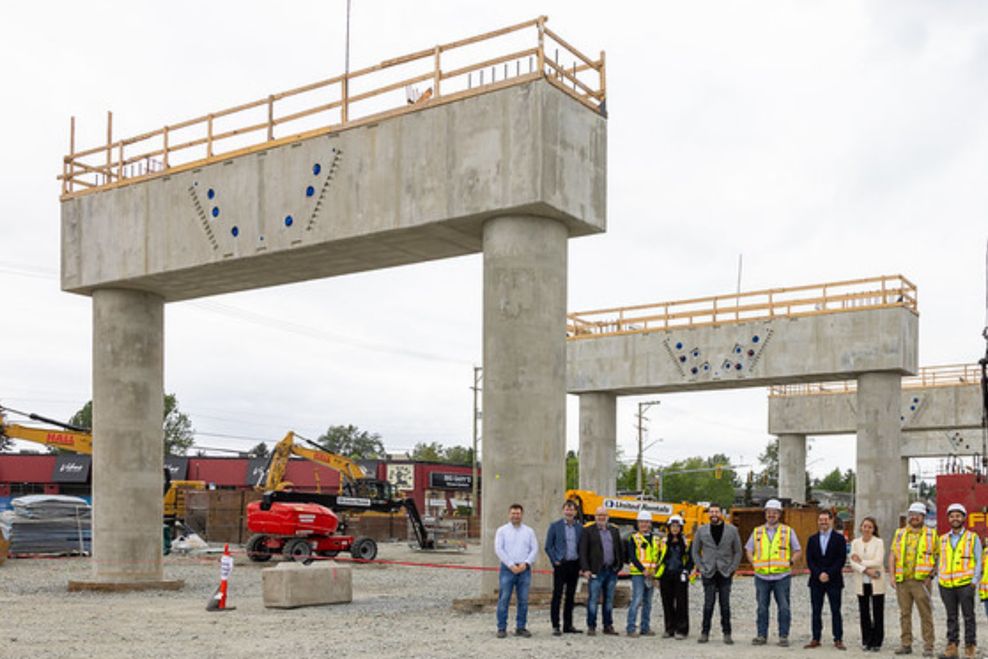
On September 15, 2026, the B.C. Ministry of Transportation announced that the Surrey-Langley SkyTrain extension will carry the name of former NDP premier Dave Barrett, who served as premier from 1972 to 1975. The 16-kilometre elevated line, now officially the Dave Barrett Extension, is scheduled to open sometime in 2029 and will connect Langley City Centre to the existing Expo Line at King George Station in Surrey. According to the ministry, the project reached a major construction milestone in May 2026, and by July, members of the public were invited to sign a time capsule that will be embedded in the guideway. The naming announcement comes with a specific performance metric: the province expects average weekday ridership to hit 80,000 by 2050, and travel time from Langley City Centre to King George Station is projected at just over 20 minutes.
The Barrett naming is not merely ceremonial. The ministry explicitly tied the decision to his government's transit legacy, noting that between 1974 and 1975, his administration expanded transit services in Surrey, Delta, White Rock, and Langley, replacing limited existing services and establishing the foundation for the regional network that exists today. Premier David Eby and Transportation Minister Mike Farnworth both emphasized that the extension will connect residents with jobs, housing, and education. For real estate watchers, this framing matters because it signals provincial intent to treat the corridor as a long-term growth spine rather than a standalone transit project. The historical reference also suggests political continuity that could influence future zoning decisions and station-area planning.
Zihe Zhang Commentary
From a senior Greater Vancouver agent's perspective, the Dave Barrett naming is a milestone that matters more for psychology than for immediate pricing. It tells buyers, sellers, and tenants that this line is locked in, which reduces uncertainty but also means the speculative phase is ending. The clients who benefit most are those who bought or held through the announcement phase and can now ride the construction period without worrying about cancellation. For new entrants, the window for early-mover advantage is narrowing. The key is not to overreact to the name, but to use it as confirmation that due diligence on station proximity, municipal zoning, and construction timing is now more important than ever. Watch the 2027 to 2028 period for pre-completion inventory to hit the market, as that is when pricing pressure often peaks before the actual opening.